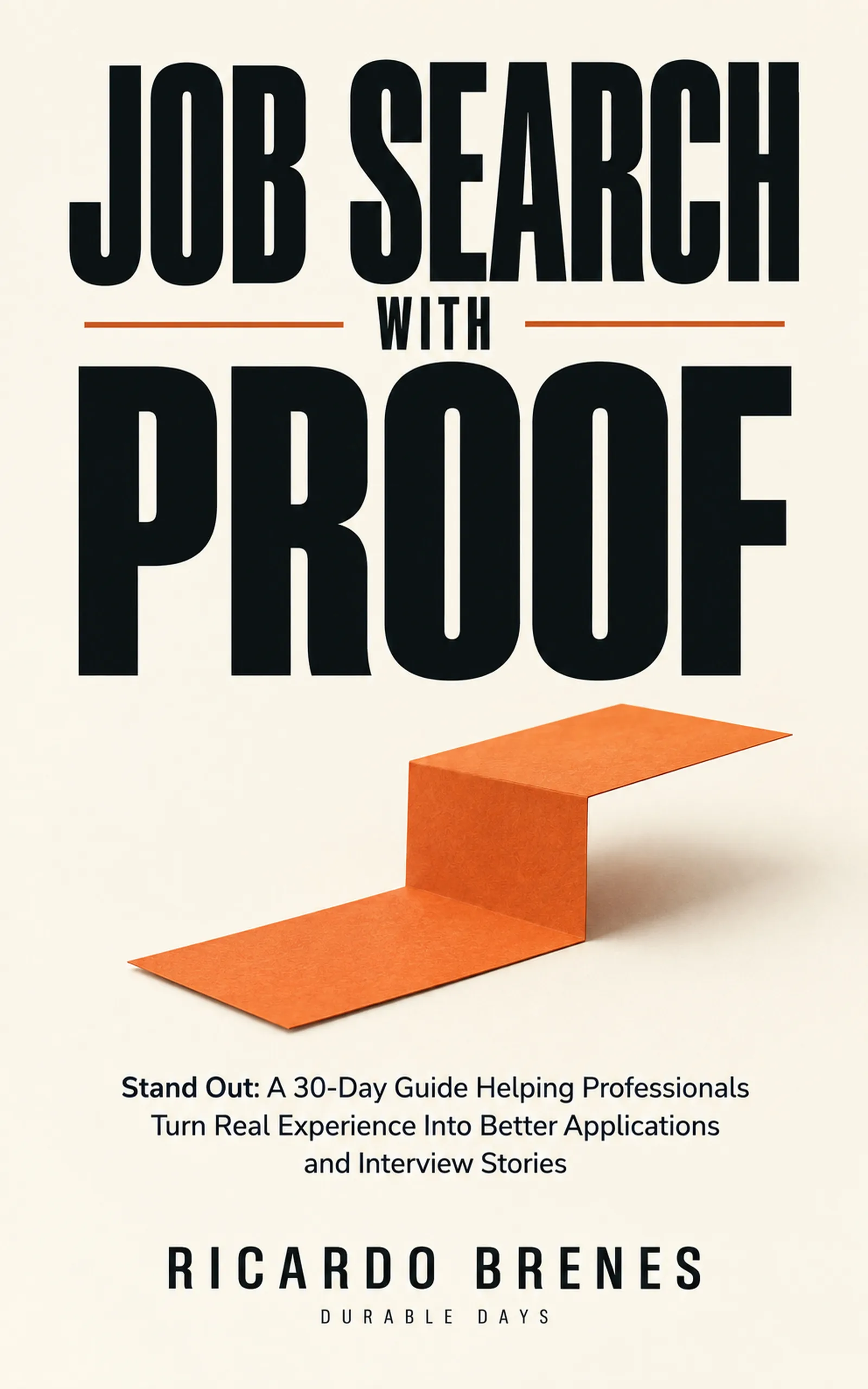
Applying for jobs and hearing nothing back? Build a focused 30-day search plan using your real experience.
This practical guide helps you stop sending scattered applications and start making clearer choices about roles, resumes, follow-ups, and interview stories—without exaggerating your background.
Ten-minute practice
Run a target-and-evidence check.
Use private notes. Never enter confidential employer or client information.
Focus before volume
Name the one role you are pursuing this month.
List three roles or industries you will set aside for this cycle.
Write one accomplishment and the source you need to verify before using it.
This page does not submit or save information.
About the author
Ricardo Brenes is a Costa Rican entrepreneur. He builds AI-assisted publishing systems and edits practical guides under the Durable Days imprint. In those guides, his editorial focus emphasizes clear steps, careful research, and honest limits.
A focused job search starts with evidence you can explain, support, and adapt. Choose one target role, separate facts from presentation, build before tailoring, and use a ten-minute exercise to test whether each claim can survive a reasonable follow-up question.
Choose a target role based on responsibilities, scope, conditions, and evidence you can support. Then create a no-list for near matches you will skip during this search cycle. Use the same verified evidence across applications, review results in defined batches, and adjust one major element at a time.
Store career experience as evidence, not finished résumé language. Each unit records context, action, outcome, and a verifiable source. This structure keeps your claims truthful, reusable, and easy to tailor across résumés, cover letters, interviews, and portfolios without inventing details.
AI can polish a sentence before it has earned the right to sound confident. In a job search, that creates a quiet risk: language you would not use, claims you did not make, or details you cannot defend. A safer role for AI is critic, not ghostwriter.
Questions readers ask
Who is this workbook designed for?
It's designed for mid-career professionals who want a more focused job search, clearer evidence of their value, and practical boundaries for using AI without misrepresenting their experience.
What practical tools does the book include?
Choose target roles that fit your experience—and identify roles to skip; turn past accomplishments into truthful, specific resume material; track applications and follow-ups so important next steps do not disappear.
Does the book recommend letting AI write applications?
No. The method keeps human judgment central and uses AI primarily to question, compare, and improve material grounded in your real experience.